
For years, the hardest part of our game nights happened before anyone opened a box. Our friend group likes long dinners, long campaigns and, as it turns out, long discussions about what to play and where to order food. At some point Heiko and I got tired of it and started experimenting with better ways to ask the group.
This post is about the method we ended up with. We call it push-pull voting, and it is how BOP counts votes by default.
How push-pull voting works
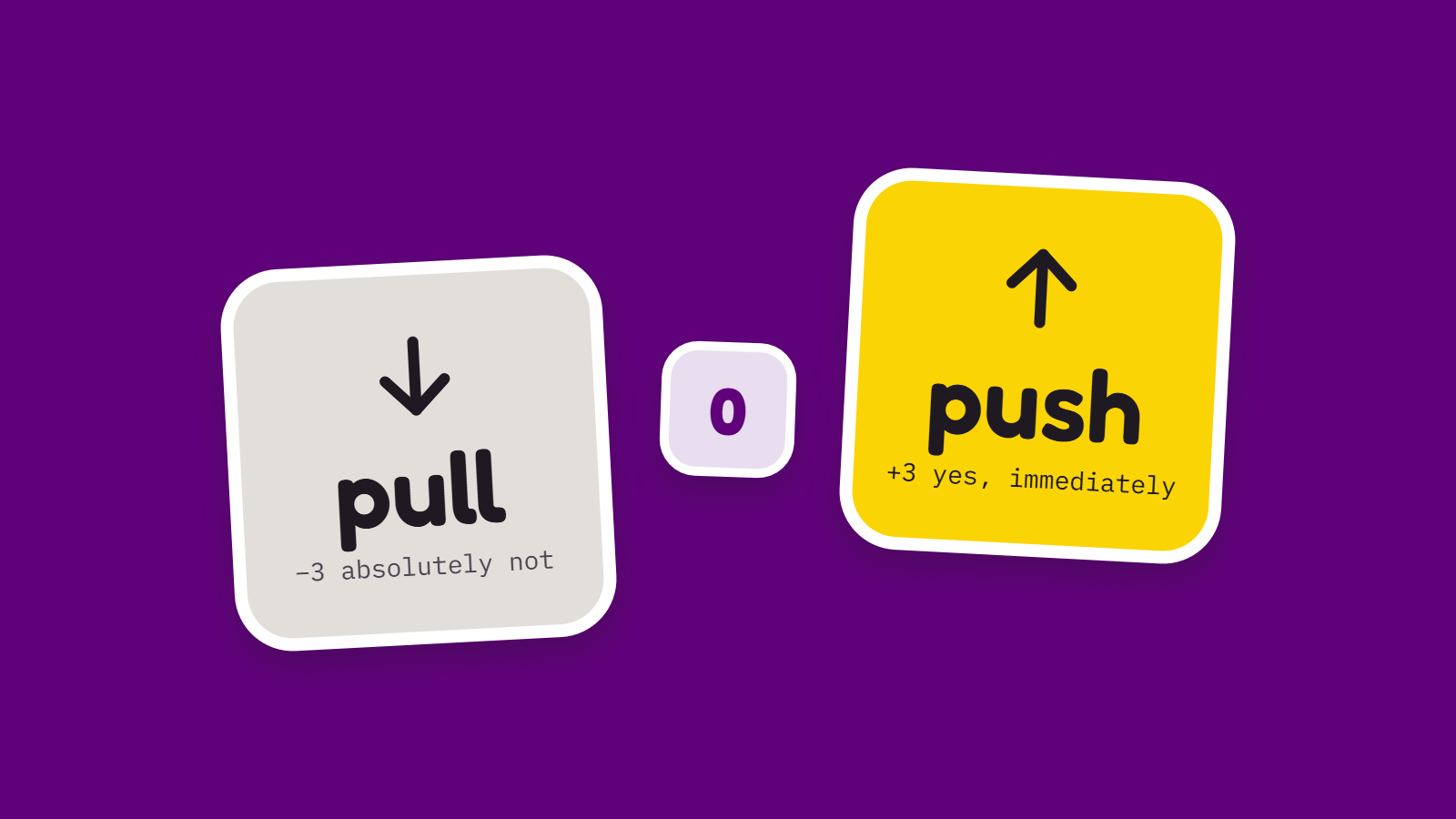
Everyone rates every option on a scale from −3 to +3. You push up the options you would enjoy and pull down the ones you would rather avoid. Zero means you don’t mind either way. All ratings are added up, and the option with the highest total is the group’s best option.
That is the whole method. It fits into a spreadsheet, which is exactly where ours lived for the first few years.
What we tried before
We did not start with this scale. Over the years we tried quite a few ways of collecting opinions: a show of hands, everyone naming one favourite, ranking the whole list, stars from one to five. Each of them worked on some evenings. None of them worked consistently.
With a simple majority vote, three people would happily pick the Thai place while the fourth quietly dreaded the evening. Ranking was fine for four options and a chore for twelve. Stars looked promising, but from my experience nobody agrees on what two stars mean. Is that “meh” or “please no”?
The −3 to +3 scale was the one that kept giving us the result we actually cared about: the happiest group at the end of the evening. So we kept it, and it has been the same scale ever since.
Why it works so well
It has a real neutral
Zero sits in the middle and means “fine by me” or “I don’t know this one”. That matters more than it sounds. When somebody suggests a game half the table has never heard of, nobody has to pretend to have an opinion.
It is easy to find your place on the scale
Positive means I want this, negative means I don’t, and the number says how much. I have never had to explain it twice, which is more than I can say for the spreadsheet.
It shows how much you care
A +1 and a +3 both say yes, but they are very different kinds of yes. The same goes for the negative side. A normal poll throws that difference away. Here it decides the outcome.
Dislikes count as much as likes
An option that three people love and one person hates will often lose against an option everybody rates +2. From my experience that second option makes for the better evening. I wrote more about this in the post on why the least hated option usually beats the most loved one.
Similar options don’t steal votes from each other
Put two sushi places on a pick-one poll and the sushi fans split, so pizza wins although most people wanted sushi. With push-pull voting every option is rated on its own, so both sushi places can score well.
Every group makes the scale its own
The scale is flexible. Some groups use the full range all the time. Others keep the threes for special cases, so a −3 really means something. Both work, as long as the group reads the numbers the same way, and that tends to happen by itself after a few rounds.
You can still have hard vetoes
The scale does not replace a veto. If someone is allergic to peanuts or simply cannot face another round of Catan, the group can agree that this option comes off the list, whatever its score. In most groups this is rarely needed, because a −3 already carries a lot of weight.
Everyone has the same voice
The loudest person at the table gets seven steps. So does the quietest. Nobody has to argue for their choice out loud, which from my experience is why the quiet ones give up in open discussions.
You get a ranking, not just a winner
When the restaurant turns out to be closed or the game needs a fifth player, the runner-up is already there. No second vote needed.
Where it has limits
Push-pull voting assumes that everyone wants a good evening for the whole group. If someone gives +3 to their favourite and −3 to everything else every single time, the method cannot fix that.You should have a conversation.
And some decisions belong to one person. If it is your birthday, you pick the restaurant.
Try it at your next game night
You don’t need any tool for this. A sheet of paper works, and so does a spreadsheet, although I would advise against cells that flash red. If you would rather skip the adding up, you can start a poll.